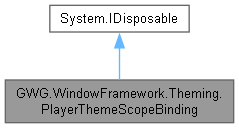
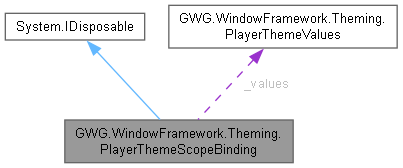
Owns reversible player-theme mappings for a bounded framework visual subtree. More...
Public Member Functions | |
| PlayerThemeScopeBinding (VisualElement root, PlayerThemeValues values) | |
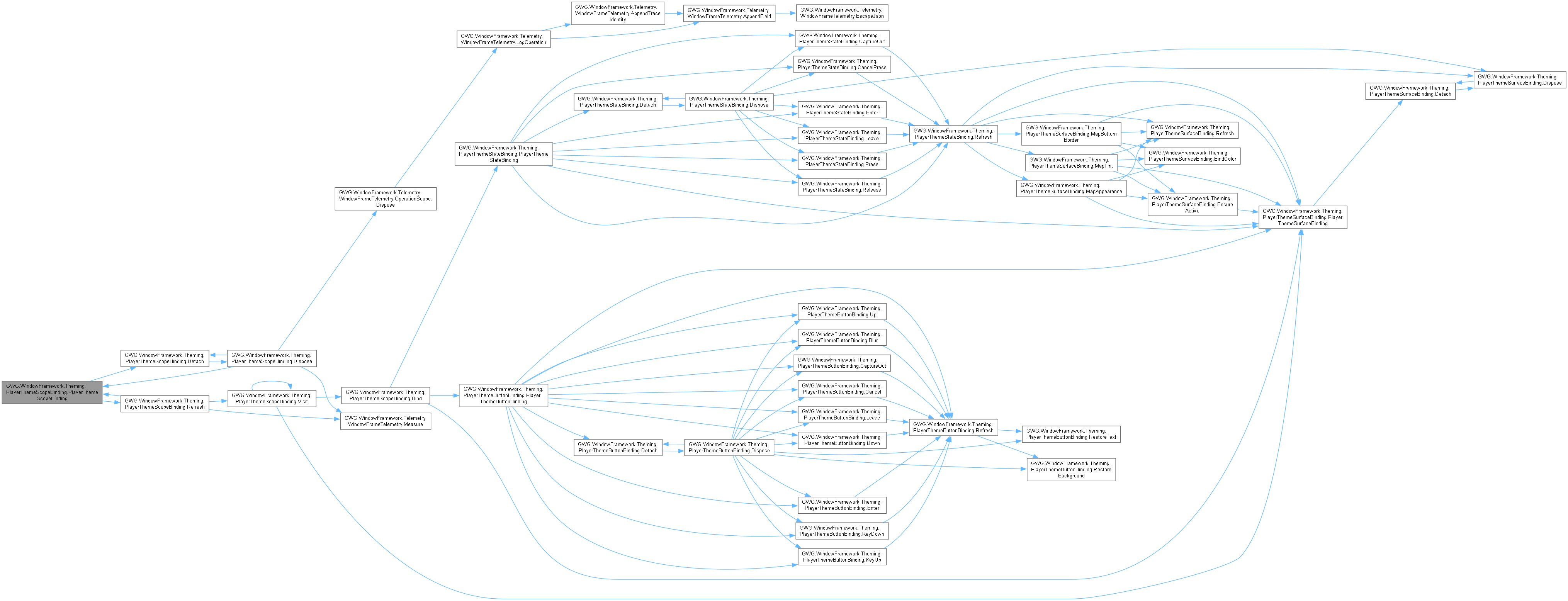
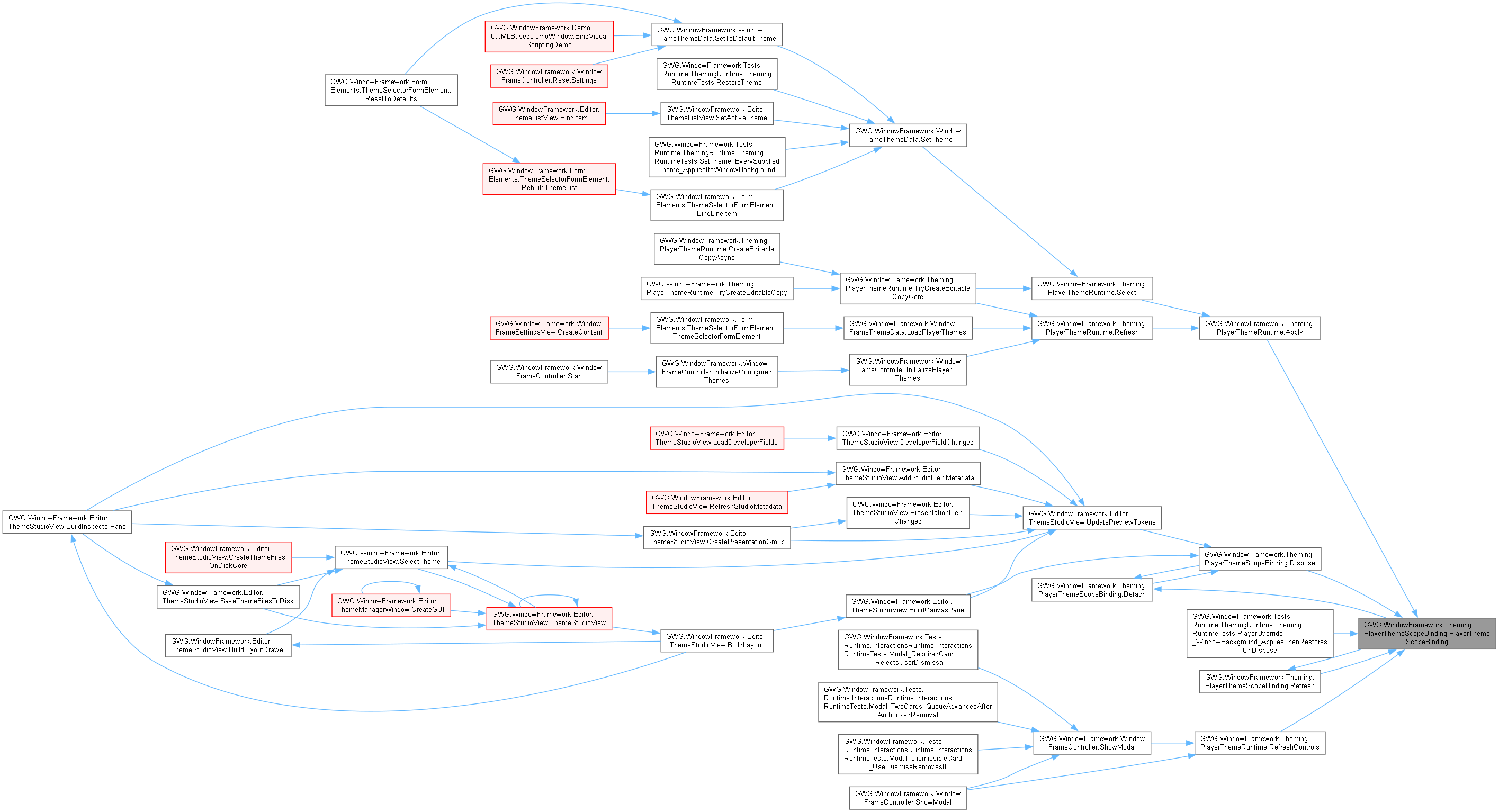
| Registers an exclusive subtree scope and maps currently present controls. | |
| void | Dispose () |
| Restores owned overrides and removes this root from the scope registry. | |
| void | Refresh () |
| Reconciles known controls after explicit owner notifications. | |
Static Public Member Functions | |
| static void | RefreshControl (VisualElement element) |
| Refreshes only existing bindings for a control whose visual state changed. | |
Properties | |
| bool | IsDisposed [get] |
| Gets whether detach or explicit disposal released this scope. | |
Private Member Functions | |
| IDisposable | Bind (VisualElement element) |
| void | Detach (DetachFromPanelEvent evt) |
| void | Visit (VisualElement element, HashSet< VisualElement > present) |
Private Attributes | |
| readonly Dictionary< VisualElement, IDisposable > | _bindings = new Dictionary<VisualElement, IDisposable>() |
| bool | _disposed |
| readonly VisualElement | _root |
| readonly PlayerThemeValues | _values |
Static Private Attributes | |
| static readonly List< PlayerThemeScopeBinding > | Instances = new List<PlayerThemeScopeBinding>() |
| static readonly HashSet< VisualElement > | Scopes = new HashSet<VisualElement>() |
Detailed Description
Owns reversible player-theme mappings for a bounded framework visual subtree.
Maps implemented window, modal/card, tooltip/menu, tab, settings-row and native-control roles plus Button states using canonical values and public inline styles. This is not an arbitrary USS selector interpreter. Nested registered roots are excluded from ancestor ownership. Construction and explicit Refresh traverse the subtree; no per-frame scan occurs. Call Refresh after changing structure/classes/state, and dispose before imported textures. Root detachment disposes the scope; recreate it on later attachment. Descendant labels/buttons matching these rules can be styled even when they are application-created. Use explicit compiled extension ownership for unsupported custom roles rather than competing palettes.
Constructor & Destructor Documentation
◆ PlayerThemeScopeBinding()
|
inline |
Registers an exclusive subtree scope and maps currently present controls.
- Parameters
-
root Explicit scope root, with nested scopes handled independently. values Authoritative resolved values for this scope.
- Exceptions
-
ArgumentNullException Arguments are null. InvalidOperationException Root already has a scope.
Member Function Documentation
◆ Bind()
|
inlineprivate |
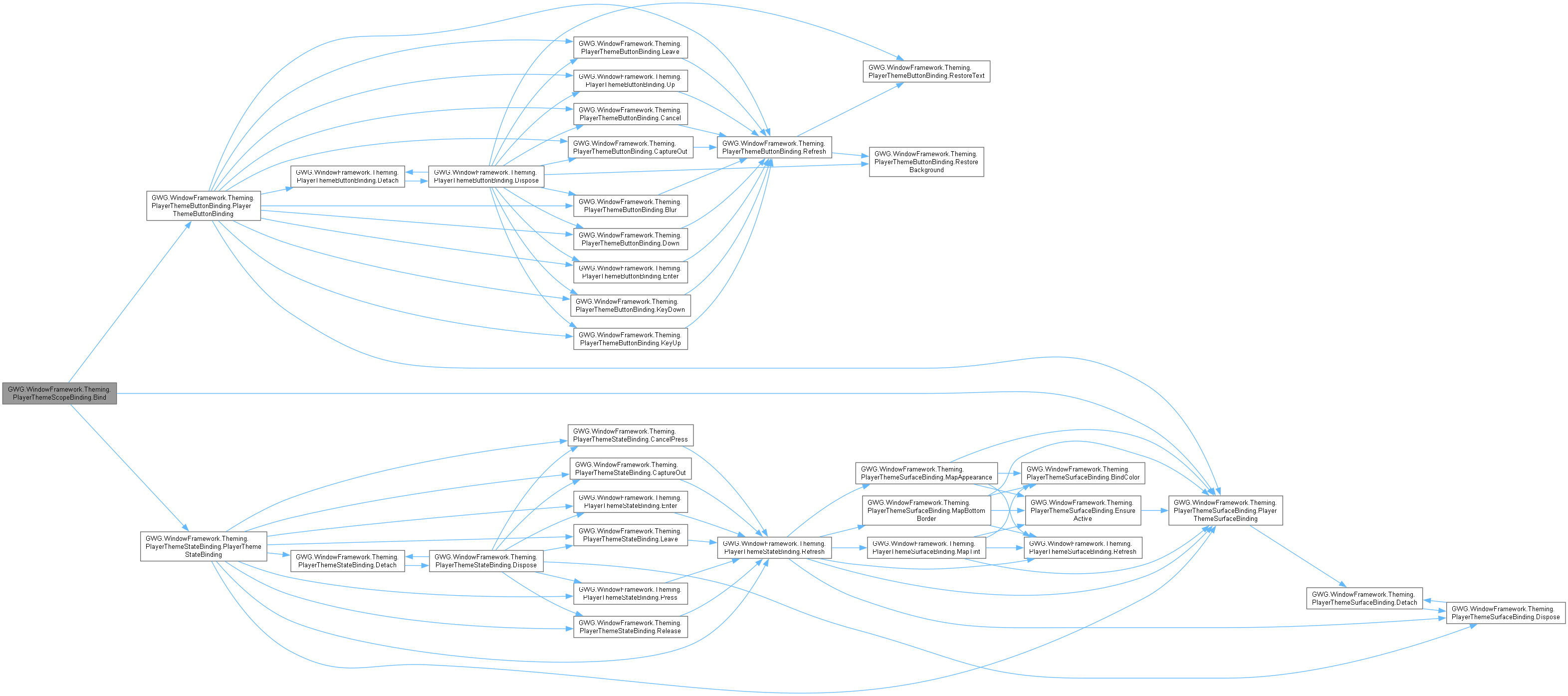
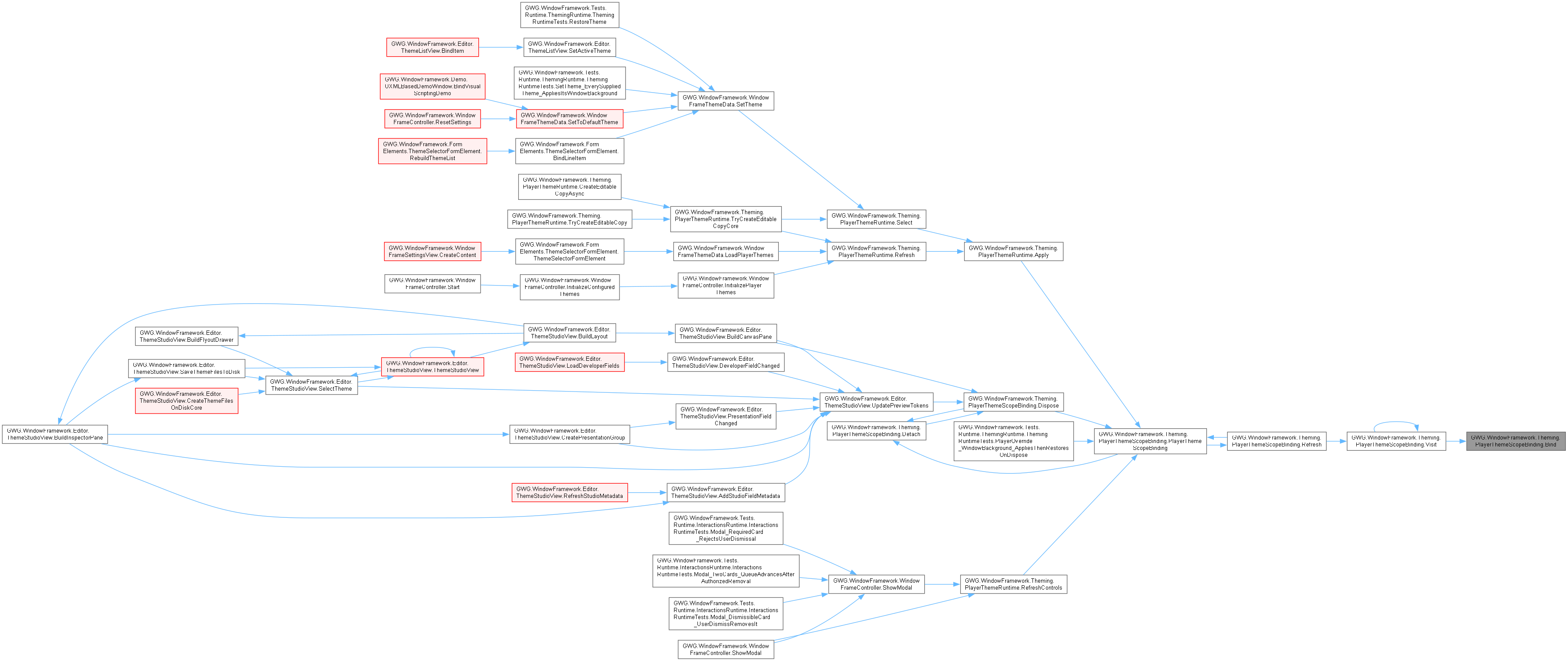
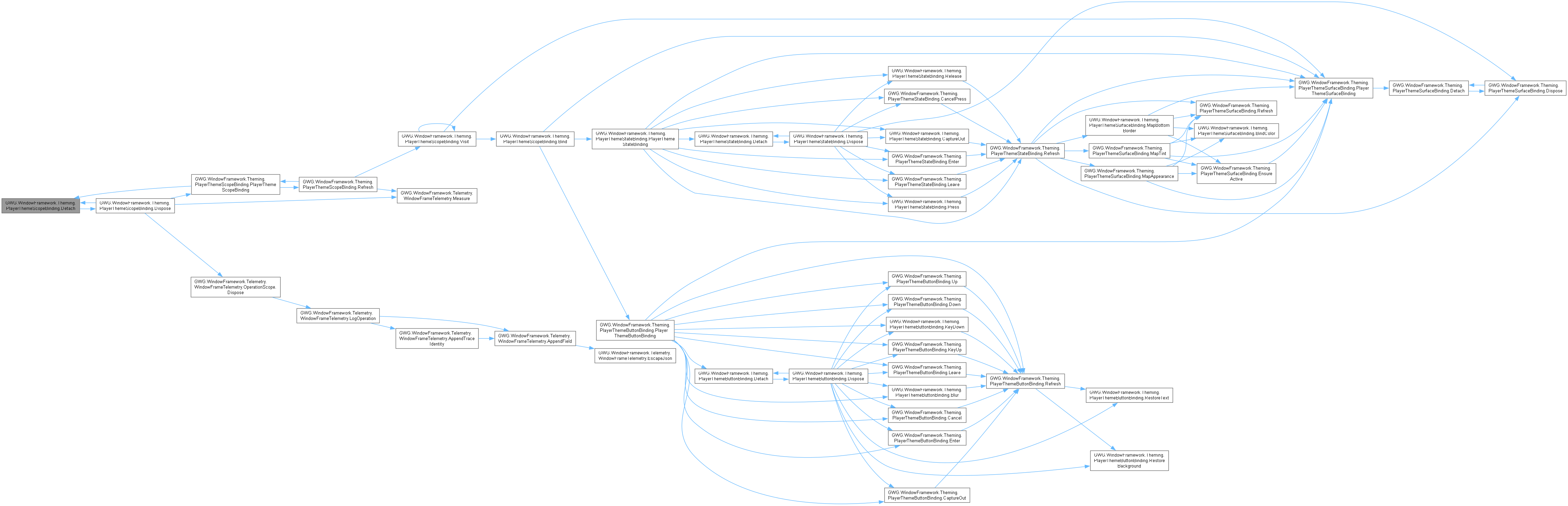
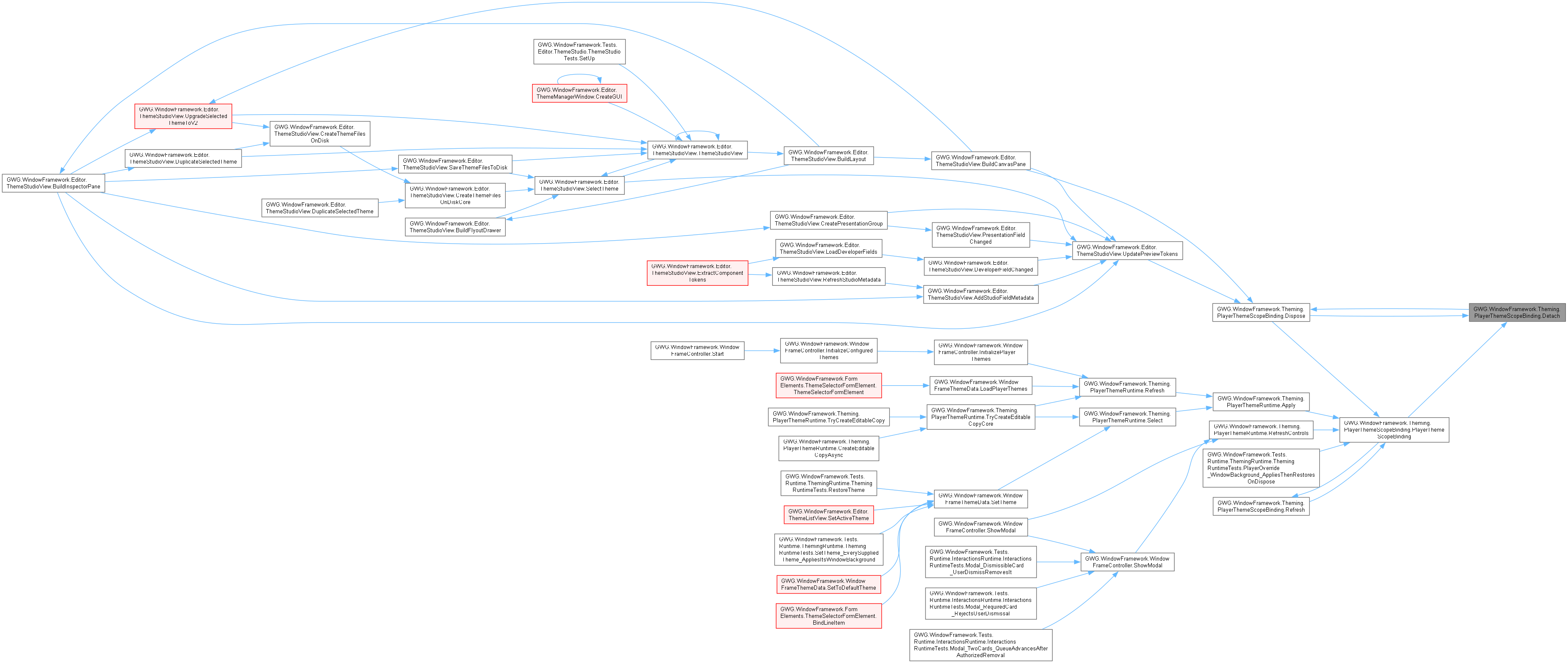
◆ Detach()
|
inlineprivate |
◆ Dispose()
|
inline |
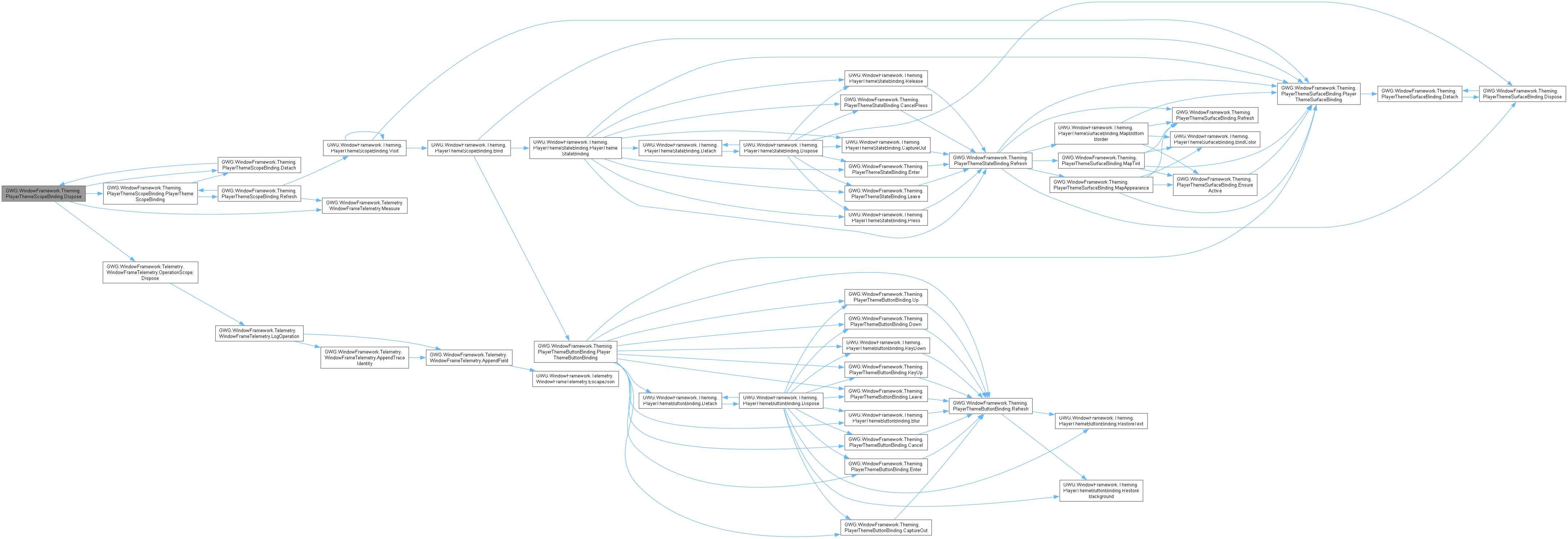
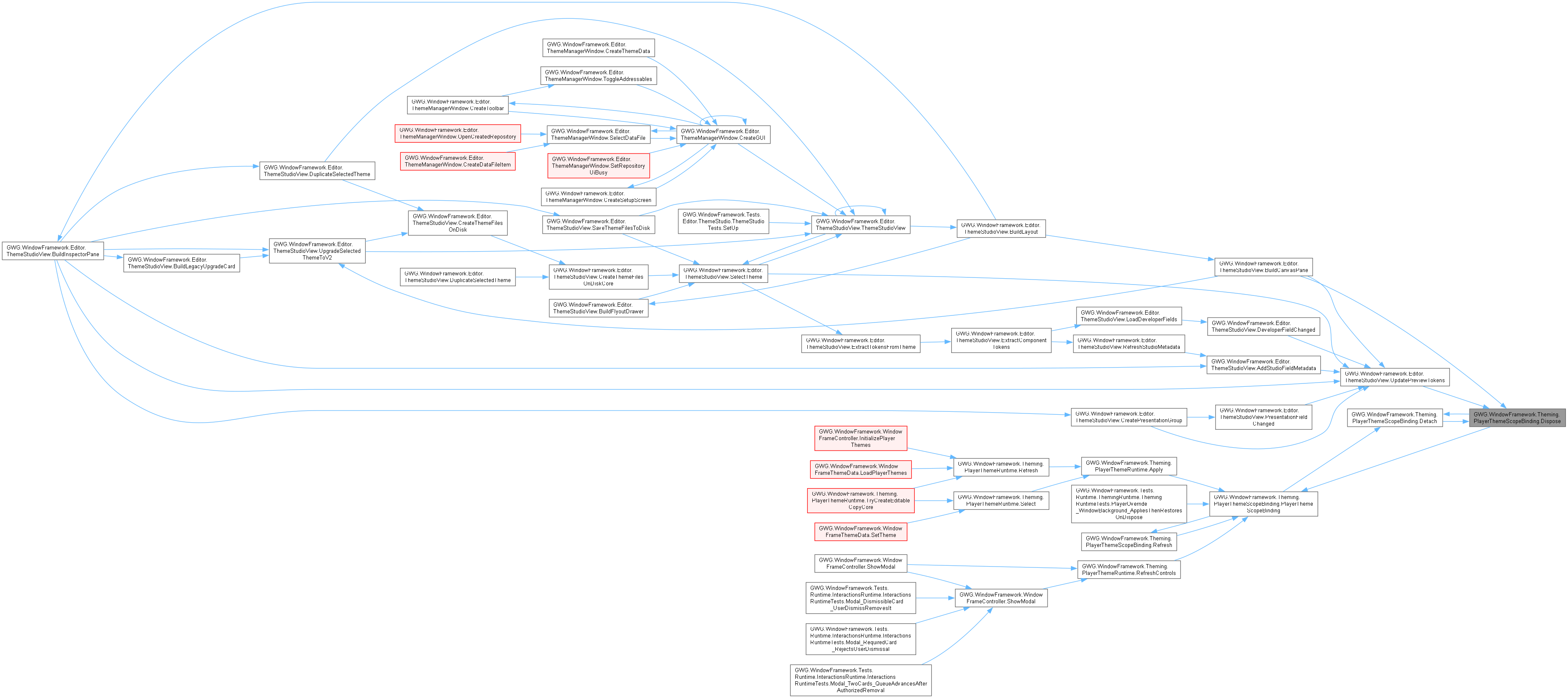
Restores owned overrides and removes this root from the scope registry.
◆ Refresh()
|
inline |
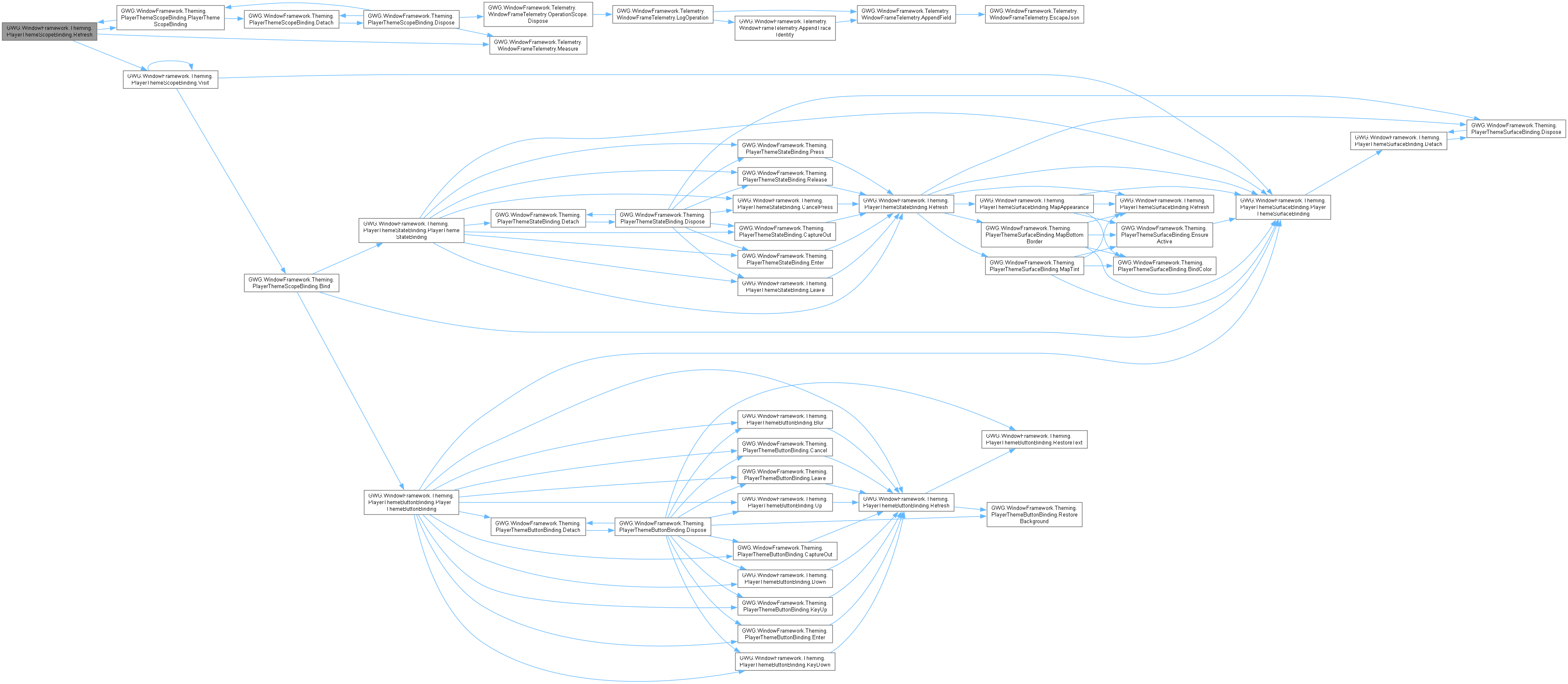
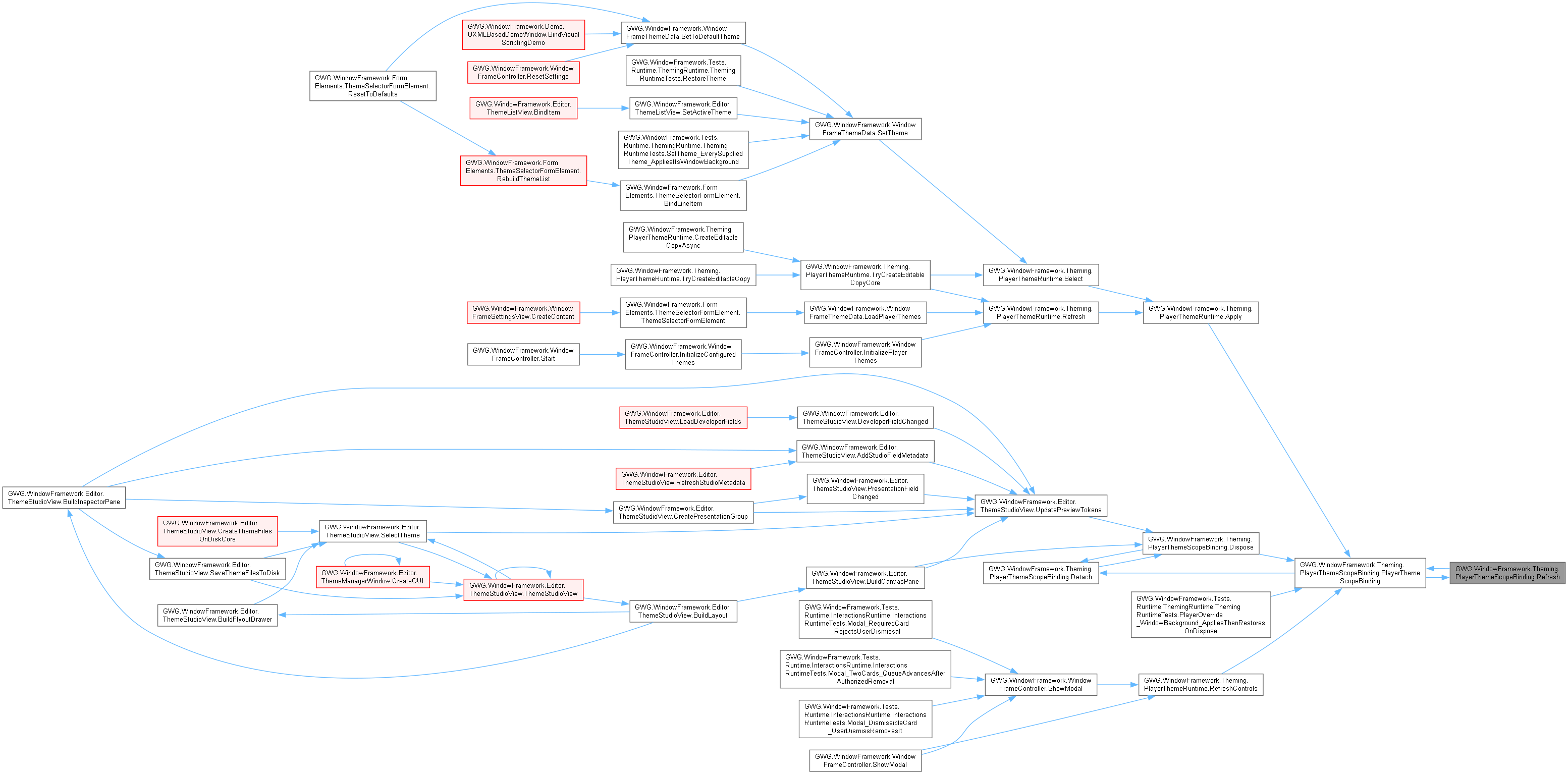
Reconciles known controls after explicit owner notifications.
Releases removed/nested-scope controls and applies mappings to newly added ones.
◆ RefreshControl()
|
inlinestatic |
Refreshes only existing bindings for a control whose visual state changed.
- Parameters
-
element Exact native element; no controller/config lookup or tree scan.
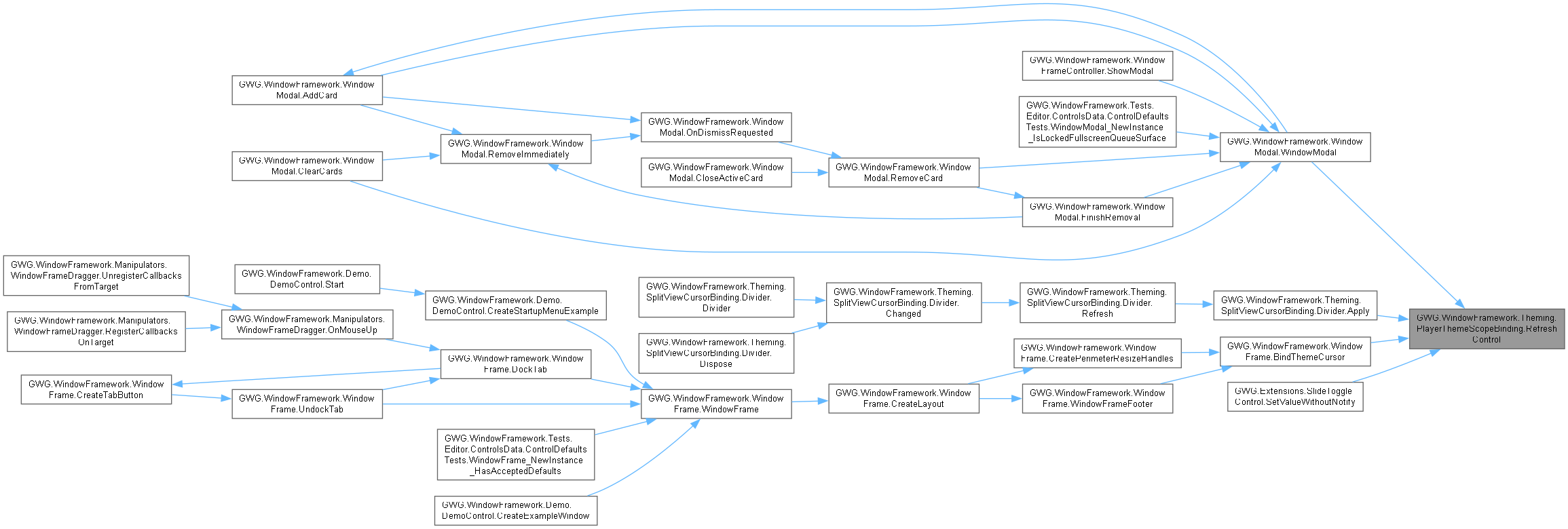
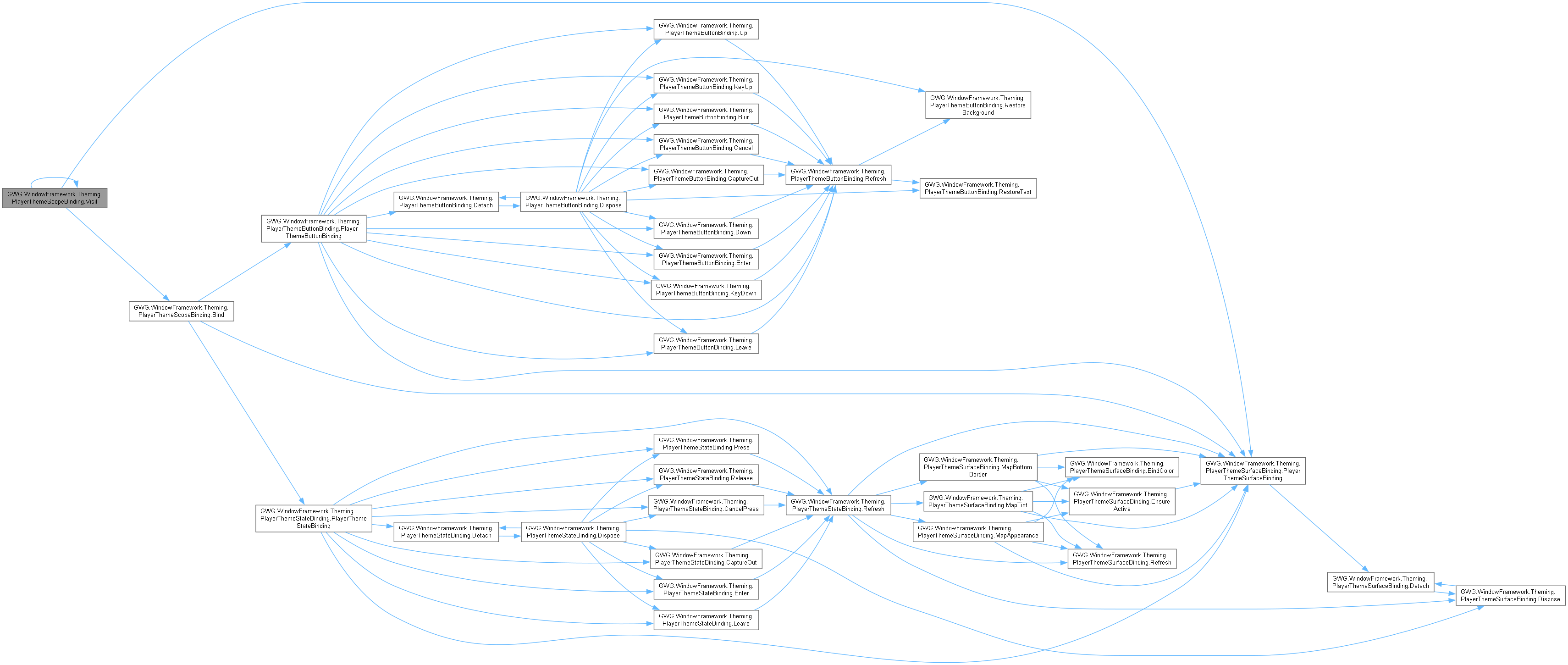
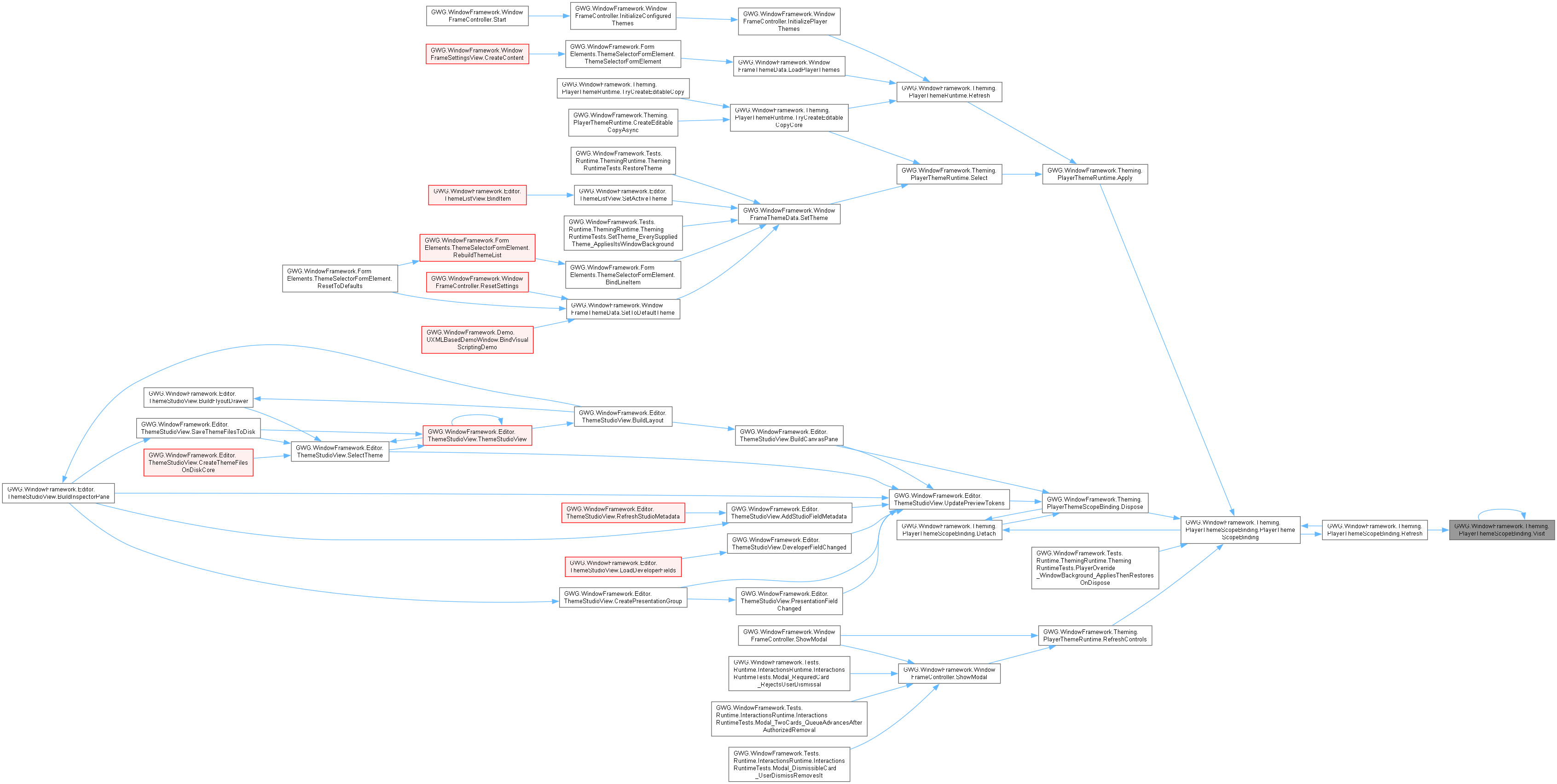
◆ Visit()
|
inlineprivate |
Field Documentation
◆ _bindings
|
private |
◆ _disposed
|
private |
◆ _root
|
private |
◆ _values
|
private |
◆ Instances
|
staticprivate |
◆ Scopes
|
staticprivate |
Property Documentation
◆ IsDisposed
|
get |
Gets whether detach or explicit disposal released this scope.
